4

What You Shouldn’t Have to Expect When You’re a Teen…

My daughter is turning 18 in less than a month.  She’s been accepted to a college and can’t wait to start making more decisions for herself and living her own life. I remember when she started Middle School at the ripe old age of 12.  I told her, “Middle School sucks for everyone. Nobody knows what they’re doing and many teenagers are cruel.  It sucked for me.  You just have to figure out how to be successful in school over the next two years so you can go on to high school and then leave there with as many choices as you can have when you graduate. ”

I’m sure I’m not the only one who’s had such a talk with their teen child.

What kind of message is that?  I thought I was protecting her, but I really was setting up an awful expectation.

In the US children are precious and must be protected.  Adults have civil rights and enjoy the full protection of the law. What about the time of life in between?  If you ask most adults to characterize teenhood or adolescence, they’ll likely tell you that it’s awkward, frustrating and confusing.  We tell twelve year olds the same thing, and they enter this phase of their lives with dread and an expectation of suffering and struggle.

Why are we surprised when they stop telling us that they’re having problems? Most of their decisions are seen as having enormous impact on their futures. Every grade they earn, person they date, sports team they make, club they decide to join feels like a life changing event.

Many adults, when asked about what they were like as a teenager, wince and say something like, “Oh God, I was a mess. I had no idea what I was doing. I was awkward and didn’t have a girl/boyfriend and I wouldn’t go back to that time in my life for anything!”  We just seem to exclaim, “Whew!” and then start living our lives in a post-adolescent world and try to ignore or not deal with all the important events that shaped us during that time. A.S. King described adolescence as a kind of “hazing” that has to be survived, and I think that’s tragically accurate.  As with any type of hazing, those going through the process do so in isolation and are expected to prove themselves by surviving horrible conditions. That’s what our teens and young adults go through every day.  This unavoidable lonely struggle is a great myth that is reflected in our Young Adult literature which more often than not, features parents and other adults as mere background figures who have little influence the teen characters’ lives.

There’s a catch 22 here that leads to much more suffering than is necessary.  Teens enter adolescence knowing that suffering and unhappiness is inevitable.  When they encounter difficulty they think that it’s nothing exceptional and is just what is to be expected, so they don’t even report it.  It’s not newsworthy. It happens to everyone.  As adults (parents, teachers, family members, or potential allies), we let ourselves off the hook at the same time.  If the suffering is unavoidable, what can we do about it?  We can help them to get help once they’re adults.

Adolescence shouldn’t be equated with suffering.  Yes, it’s a time of growth and change and of figuring out your identity and where you fit in the world, but I feel like my whole life could be described that way!  We need to rethink our cultural view of teen development and not view it as an inevitable and “untreatable” disease or stage that must be merely survived and give our teens hope that they can thrive through their teen years on their way to becoming amazing adults.

My two sons are entering this stage in their lives.  I will tell them something very different from what I told my daughter.  Being a teen is exciting and can be confusing.  It’s a time to be patient with yourself and with your peers as you learn how to make your way through school and to your first steps into adulthood.  No mistake you make will ruin your life forever.  I will be here to listen and to help you as much as I can. If you have a problem, we can work it out together and get help when you need it.  You are a fantastic person and are only getting better.
3

Teen Post!!! Erin becomes a reader

One of my goals for the Hippodilly Circus has been to give teenagers a place to speak and be heard.  Here, the goal is met. Erin is a fantastic person and as you’ll find is brilliant and funny. I am honored that she has chosen to share this story with you on Hippodilly Circus. I hope that she’ll find a great and supportive response. 

Thank you, Erin! 

As a kid I was indifferent towards reading honestly and I wasn’t a very good reader because of it. That is until the beginning of kindergarten when we began learning to read. There were a plethora of levels that you had to reach to get brightly coloured stickers and, more importantly to some people, bragging rights. Yellow, blue, green, purple, orange, etc. but the last level was dark red and I took my sweet time of getting there; until Kayla came along.

This rude little munchkin is who I credit for my love of reading, but at the time I hated her kid sized guts. At least once a week this girl would come in and switch out her books for the next level, sneering at my innocent (almost angelic) face the whole time. Each time she’d receive a new book she’d laugh like the miniature villain she was and proclaim herself the “Queen of Books” (more like Dictator of Books). This of course made me want to destroy her and her happiness (I know lovely right?) so I set to work. Every night I’d go home and read for at least half an hour, imagining the face Kayla would make when I beat her down. Nearly every day I would come in and gain a level, much faster then that little puppy kicker was advancing, so I caught up quick.

Within a few weeks I was at the level right below dark red, but so was Kayla. We glared at each other as we both snatched the orange books. The next day I sauntered past her sad attempt at confidence and performed my reading test, behind me Kayla lurked the whole time of course, but I had done it. I had reached the final level with a quarter of the school year left to go. I would say that I feel remorse for the dancing a laughing in Kayla’s face that ensued but… She deserved it.

The following year, Kayla was in a different class, but I realized I missed reading every night, so I picked up a Junie B Jones book and started up again. Now, I understood why Kayla loved to read, still didn’t feel bad about the whole thing, but you know.

To this day, reading a good book can make me feel in control or relaxed. I wonder where Kayla is now, probably in some high school terrorising slow readers or kittens, who knows. The point is: reading is like allowing some one to climb into your head a paint a beautiful picture for you, like your own personal Michaelanglo to your Sistine Chapel ceiling of a brain. It’s funny to look back on my distaste for reading as kid because it just seems so odd. Books are almost like little movies that you can watch at your own pace AND you get to decide who is cast and what it looks like! You’re basically a director,  OK maybe not but you can pretend. This is also my theory for why people don’t like movie adaptations of books, it ruins their artistic vision. Anyways, the moral of this story is; if you’re good at reading you should encourage people instead of putting them down because books are fun or something… I don’t know, use your imagination.

Erin is a 16 year old girl from Burke, Virginia and she is very excited to be given the opportunity to be published in Hippodilly Circus! Her favourite author is Rainbow Rowell (Sorry Eoin Colfer) and she loves all of her books.

4

We are Hippodilly Circus. We speak to (not at) the teens.

In the last few weeks there has been a great kerfuffle on the internet about sexism and diversity in YA books. I don’t have anything to add to the conversation, nor do I have any interest in reviving it. The “discourse” got contentious and accusatory and ugly and I am not sure what was accomplished. In the end, many were invoking the way things are or how they should be in the “YA Community.”

I read a lot of the back and forth. I’m not sure what the outcome of the outrage or the vitriol is or will be. I do know that it didn’t ever feel like a discussion, but a shouting match, as is often the case on the internet. I also have no idea what anyone meant by the “YA Community.” I don’t know who is a member of this “YA Community,” but I do know that there is one thing missing from the conversation and from this “YA Community.”

Young Adults.

I didn’t see any actual Young Adults speaking or even invited to the conversation. All I saw or heard were adults in blogging, publishing, and authors themselves telling each other what is wrong with the “YA Community.” Another group of adults telling teenagers what they need and what they like and how they are.

So, while this “YA Community” of adults is busy demonizing each other and launching accusations about what someone’s motives might be and how diversity isn’t being fully embraced, think about this.

Your ageism is showing.

Teenagers are people. They’re just young. They read, think and make their own decisions. If we can’t model an actual discussion, this “YA Community” isn’t good for much. If the teens aren’t a part of the conversation and instead are talked about as if they have nothing to contribute, then we’re just as guilty of discriminating as anybody out there pushing “boy books” or “girl books” or not promoting publishing and writing by people of color or about people of color. If I want to know what the “YA Community” thinks or feels about the diverse books written, published and marketed to them, I ask my students, kids and kids’ friends. They are the Young Adult Community and they should be consulted and heard.

That’s why I started this blog. My hope is that all voices, especially teen voices will find a place here and that real dicussions will  take place. There are plenty of places where teens are condescended to or told what’s good for them. This isn’t one of them.

We are the Hippodilly Circus and we speak to the teens.

2

Let Her Love – The Importance of Being a Fan(atic)

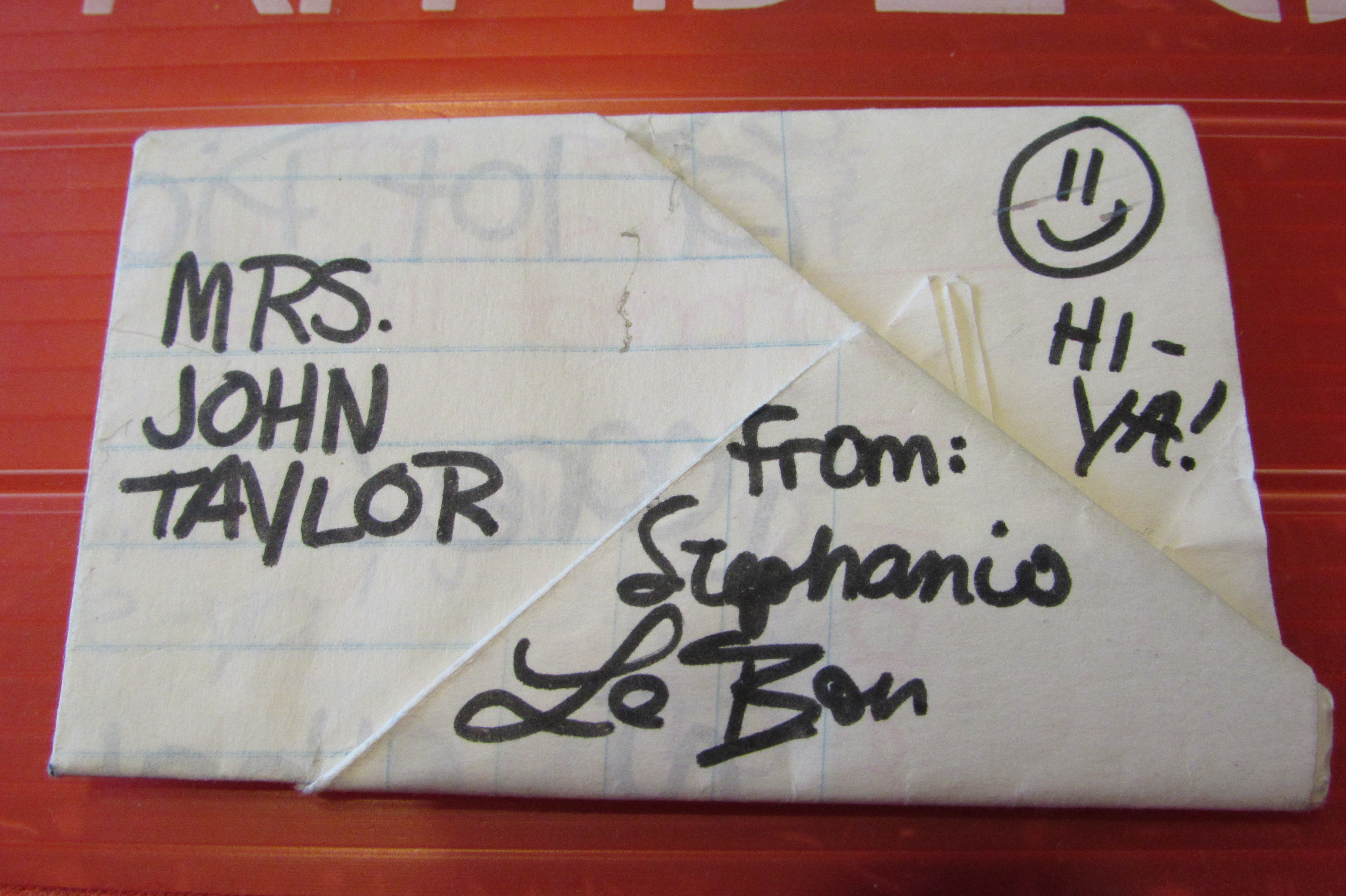
There’s nothing wrong with being a Belieber or a Directioner. There, I said it. Hell, I encourage it. I would be a huge stinking hypocrite if I didn’t. You know why? Because all of my notes written in Middle School were addressed to me thusly:

IMG_0363

Yes. I was a Duran Duran fanatic. (I just asked my husband what it was that Duran Duran fans were called. Was it Duranies? He answered, “I think it was Duranarrheas.”  He was not and is still not a fan, needless to say, though he has listened to the Talking Heads album “Stop Making Sense” eleven billion times since he was a teenager.)

In 1984 you had to pick your band member of choice and mine was obviously the gorgeous bass player. My best friend Stephanie had obviously more love in her 13 year old soul for Simon LeBon.  Making the decision to boldly love with all of our hearts was important to us. We taped songs from the radio when they came on, bought every piece of merchandise/magazine/album pressing we could find.  It gave our lives shape. Middle School wasn’t just a string of sucky days broken up by band concerts and lame family vacations.  We could talk constantly about concert dates, album releases, and the band’s pursuits. It was very IMPORTANT. We wrote fan fiction. We loved – HARD.  All American bands sucked as far as we were concerned. If they weren’t British, they were crap!  When I read somewhere the poets whom Alannah Currie from the Thompson Twins admired, I read all of her poems.  It made life bearable. It was safe and comforting and was a way to find my tribe. I belonged.

I’ve read a few interviews with YA authors who are asked, “What were you like as a teenager?” and their response is usually, “Oh God!  I was such an awkward and weird mess.”  That’s usually the extent of it and it makes me sad.  Of course, it’s not just YA authors. Many people talk that way about their adolescence as if they have offed that version of themselves that thank God they’e lived long enough to make people forget about the 15 year old version of themselves. That’s not how it should work, says I. Here I am at 16 with one of my best friends Andy:IMG_0368

He is brandishing a cassette.  I am wearing an oversize blue wool Benetton sweater over a Bernadette Peter’s in Andrew Lloyd Weber’s ‘Song and Dance’ Broadway show t-shirt that my boyfriend had drawn for me with a sharpie. We’re in Andy’s basement bedroom in Colorado during a trip that I paid for by working six days per week busing tables at the Officer’s Club on the Air Force Base where we lived. His room is covered in albums and album art and we’re big dorks.

I was a huge fan.  I didn’t just like things. I loved them so much that I was sure I’d die from my heart bursting open. It wasn’t frivolous. When my paternal grandfather died just months after my maternal grandfather the summer I was 16, I walked into what had been his CB room and put The Smiths on a tape player and cried and listened for hours alone. I knew that Morrissey understood.  Thank God I had him in my life.

One of the greatest outrages of my teenage life came in the summer of 1985.  Our family had to move from Springfield, Virginia to Montgomery, Alabama that summer and my parents scheduled our drive to Alabama on July 13th, 1985 – THE DAY OF LIVE AID! I missed the whole thing! The tragedy was impossible to communicate to my parents, and I’m still mad about it.  If you’re my age, then you know how scarring this was for me. If you’re a teenager now, I just can’t think of a similar event that would be its equivalent.  It was a tragedy!!!! A tragedy, I say!

I still love music, musicians and artists. I’m far from unique. I also still love the same music that I loved when I was 13 and still listen to it.  I play music and music videos for my reading classes when we’re all thought out for the day and need a break. When I start a YouTube video, I inevitably say, “I loooooove this (band, song, video).” One day one of my students said, “You love things too much, Ms. Lively.”  I thought it was a huge compliment.

My latest obsession is Pentatonix. I am a Pentaholic and I don’t care who knows it.  It gives me cachet with the kids, because they know that I love a band that is just starting to become very famous. If you don’t know who Pentatonix is, you should because they’re the most fantastically talented and amazing humans on the planet Earth.  I am going to go see them in concert this Thursday night March 19, 2015 and it will be my Penta-Pentatonix concert. I will be a part of the five-timers-club. I have rediscovered my former ecstatic fan self with this band. After they won the “Sing Off” on NBC, they went on tour and I took my whole family to see them at a small concert at the Howard Theater in DC. I don’t think that the show was even sold out. My youngest son, Lance is now 11 and has a harder time making friends than my older children. He also has a rich fantasy life.  He found solace in watching Pentatonix on youtube https://www.youtube.com/user/PTXofficial for hours. They are young, they are genuine and they’re fantastic and their videos often feature candid talking as if you are sitting on a tour bus with them, or laughing at their weird and even dorky jokes.  I bought VIP tickets for Lance and me for the last 3 concerts we’ve attended. Last March, I splurged and bought front row center tickets for the two of us at DAR Constitution Hall in that included a private concert in their dressing room. It was a once-in-a-lifetime experience, and it was amazing.

Lance PTX 2014

I’m still the same person I was at 13.  I have been telling my students for a few years that Pentatonix’s tall, beautiful, blonde and half my age singer, Scott Hoying is my boyfriend. They always say, “But, Ms. Lively, you’re MARRIED!” with both scandal and horror in their voices.  My response is always, “But I’m not married to you, so don’t worry about it.”

When we got our posters signed in the line at the last Pentatonix show, I explained to Scott that my students just did not believe that he is my boyfriend. I asked him if he could sign my poster so that they would finally believe in our relationship. He obliged because he’s a fantastic human being not above humoring a woman who enjoys her fantasy life as much now ans she did when she was 13.  So, what was I like as a teenager?  I was pretty much the same girl I am now as this poster will attest.

Scott is my boyfriend

So, though I may be older and have more education and am a wife and mother today, when it comes to my “love life” as a fan, not much has changed. I am still madly in love with a tall, beautiful musician whose music makes me happy. There’s nothing wrong with it. If you’re disparaging a Belieber, a Directioner, a Kanye devotee, Taylor Swift, or a Beyonce love, because they’re “just a teenager and they don’t know what they’re doing and have terrible taste in music” you’re just wrong.  We teens and former teens know what we love and there is not logic or empirical data that makes an impact on us. Just stand aside and let us “belieb,” or “direction” or be the biggest “Swifty” in the world.  We’ll all “Save a Prayer” that you find something to love like we have.

https://www.youtube.com/watch?v=mnEXOHjFNVg

1

NOVA Teen Book Fest 2015

The 2nd Annual NOVA Teen Book Fest happened yesterday, March 7 at the Washington and Lee High School in Arlington, VA.  I can’t remember how I heard about it, but I was thrilled that there was a festival dedicated to Teens and YA and that it would be held in my neck of the woods.  My attendance ended up being limited because my family and I couldn’t get our plans for the day quite together and I ended up arriving a few minutes after 2, so I missed the last round of small panels, so I shopped for books, of course and waited for the keynote address.

Books bought:

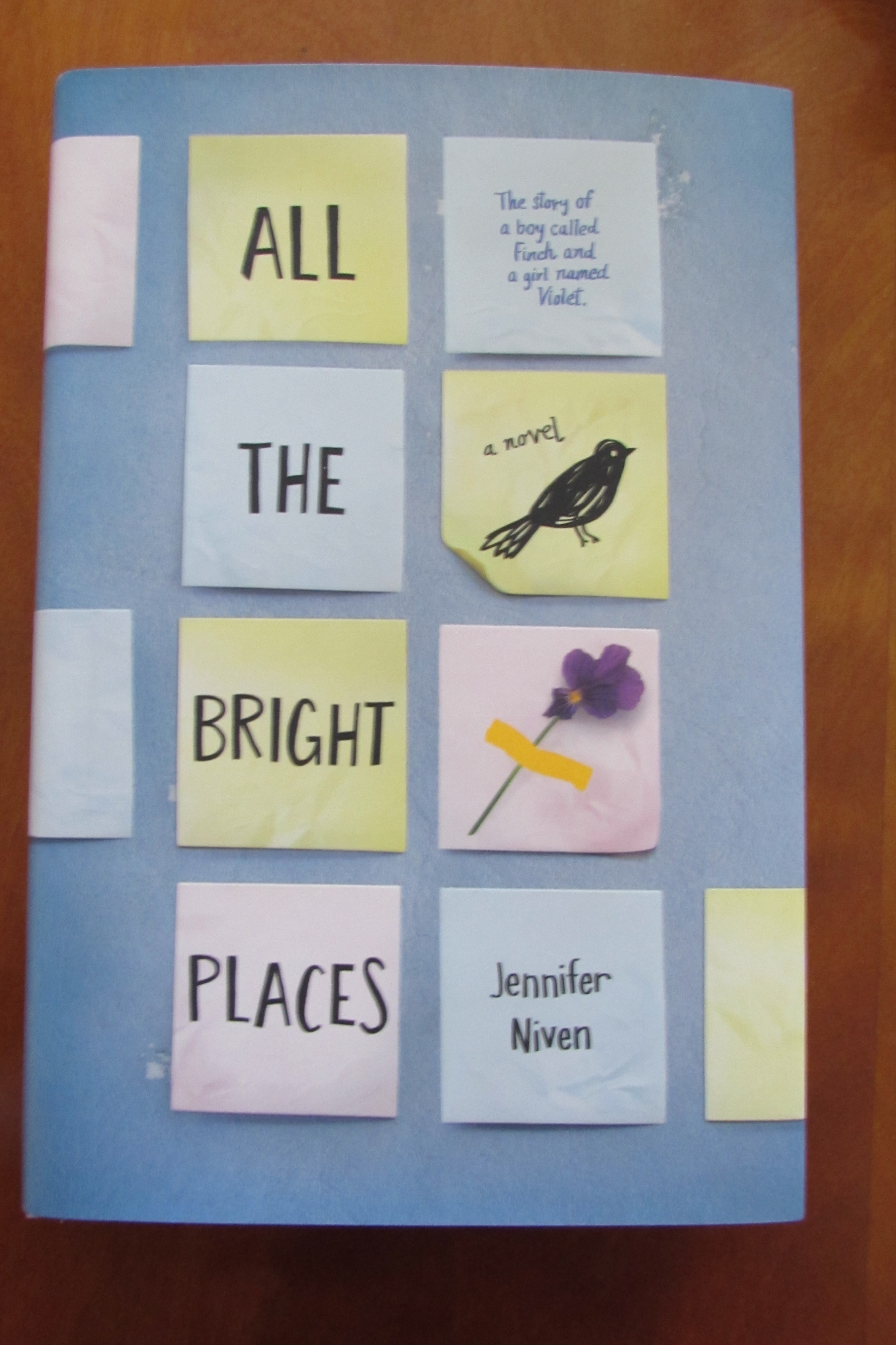
All the Bright Places - Cover

All the Bright Places by Jennifer Niven has a fantastic cover and is a book I have been hearing a lot about.  It’s already been sold to become a movie, so we all need to read it before the filmmakers interpret the story for us. I just read who is going to star in it and I’m not going to share it here, because I hate having an image of a character when I read a book. What the character looks like and is like is something worked out between me and the author, damnit.  I’m also annoyed that I just read that it’s described as “mega popular YA book X” meets “mega popular YA book X” because I’ve already read those books, so I am hopeful that this is a new and unique story not a mash up of already written books.  Jennifer Niven was at the NOVA Teen Book Festival and she was charming and took time to speak to dozens of teens who were getting their books signed. This one is absolutely on my list to read. I am going to take it to school tomorrow and give it to one of my voracious readers so I can hear what she thinks of it.  I have so many books on my to read list that I can’t leave this one around unread. It’s a strategy I use often with books I collect. I announce to my students, “I need somebody to read this for me to tell me how good it is!”  It’s a great way to get books read and they get to be my reviewers. They’re brutally honest and they know that I respect and want their feedback.

I also bought:

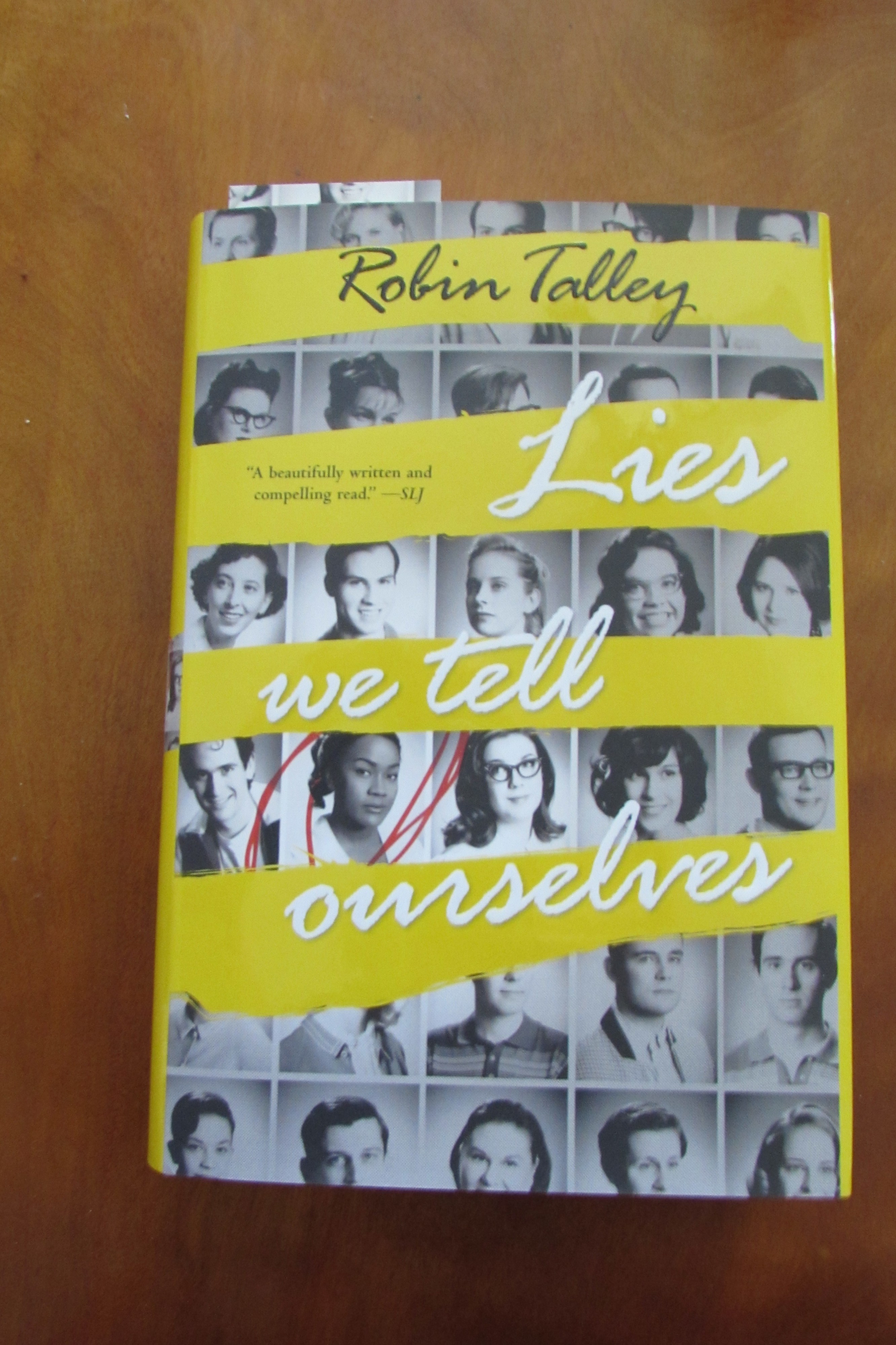
IMG_0357

Lies We Tell Ourselves by Robin Talley. It’s so hard to just scan over book covers and then make a decision.  Because I am not up to date on fantasy YA, I was shopping in mostly the realistic fiction books.  This one has an intriguing cover and a local Virginia author!  I thought it was a particularly great story to be presenting on the 50th Anniversary of the March in Selma, because it tells a story about a civil rights pioneer.

From the inside flap description – which sold me:

“In 1959 Virginia, the lives of two girls on opposite sides of the battle for civil rights will be changed forever.

Sarah Dunbar is one of the first black students to attend the previously all-white Jefferson High School. An honors student at her old school, she is put into remedial classes, spit on and tormented daily.

Linda Hairston is the daughter of one of the town’s most vocal opponents of school integration. She has been taught all her life that the races should be kept “separate but equal.”

Forced to work together on a school project, Sarah and Linda must confront harsh truths about race, power and how they really feel about one another.

Boldly realistic and emotionally compelling, Lies We Tell Ourselves is a brave and stunning novel about finding truth amid the lies, and finding your voice even when others are determined to silence it.”

Teens need as many stories of the dangers and personal impact of racism as they can get.  I can’t wait to share this book with my students and my own children.  When I spoke to the author Robin Talley when she signed my copy, we discussed how so many students don’t fully appreciate the cruelty of institutional racism and how it affected so many children’s and teen’s daily lives. I am eager to read this.

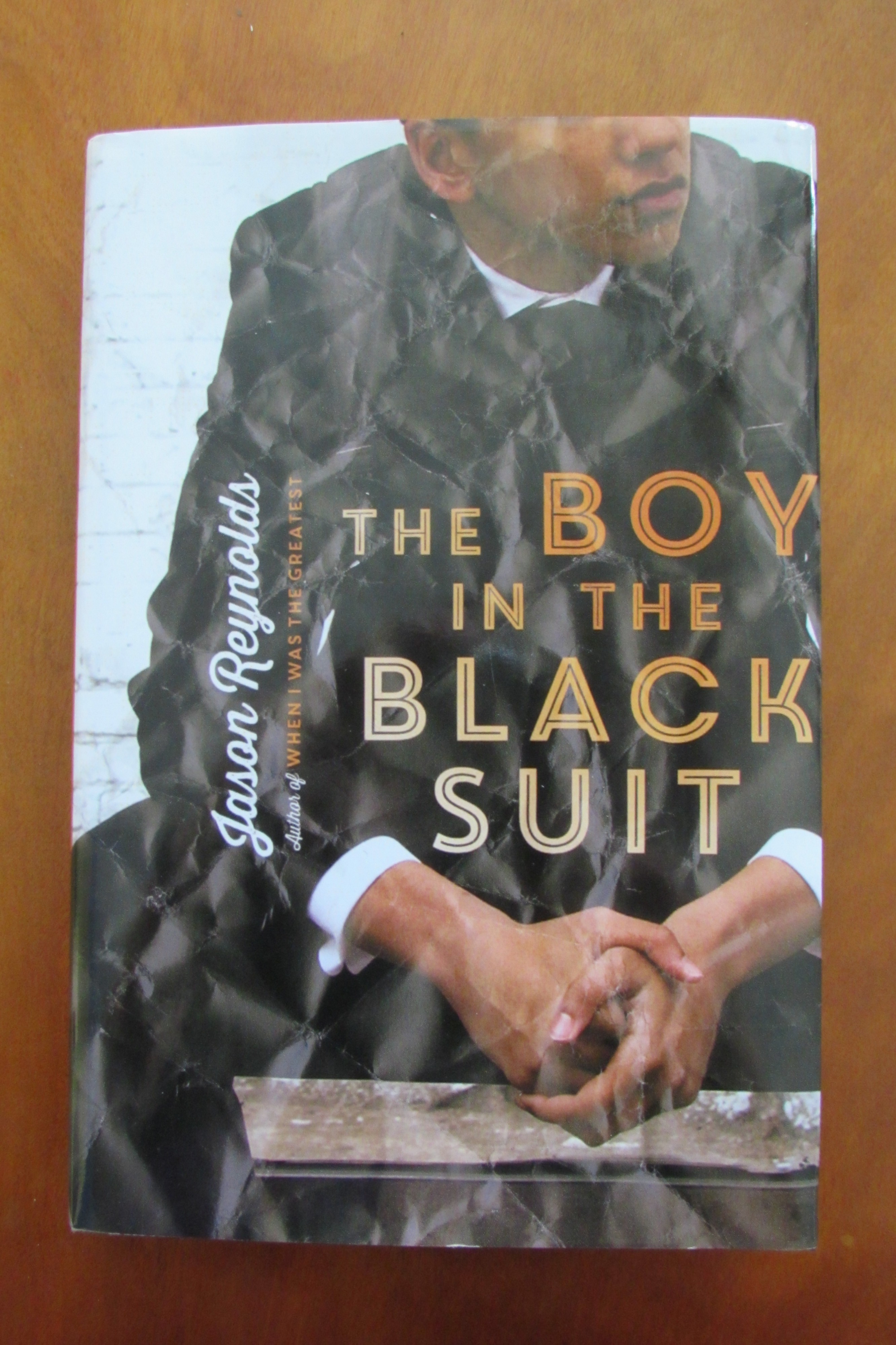
Boy in the Black Suitt

The Boy in the Black Suit by Jason Reynolds. I am a huge Jason Reynolds fan. Huge.  I only learned about him at the National Conference of Teachers of English last November. He was one of the many authors who came to the exhibit hall to sign copies of his books and to talk to teachers. I’ll be honest here. I stopped because he looked unlike any other author I’ve ever seen. He’s young, tall, has long big dreadlocks and dark skin.  I knew that I had students who would be attracted to his books because he looks so different from many of the other authors they’ve encountered.  I got in line and then had to decide which of his books I wanted to receive and have him sign. I chose his first book, When I Was the Greatest primarily because it has an image of a gun covered in colorful crochet on the cover.  I knit and crochet a lot and I love bright “circus horse” colors.  So it was a love match.  One of the characters in the book is a young man who has Tourette’s Syndrome and knitting helps him to control his verbal and physical tics. I asked Jason who in his family knits and he said that he did!  He learned to knit because he could never find a hat that was big enough to fit over his head and hair.  I read When I Was the Greatest and I absolutely loved it. I recently bought his new book The Boy in the Black Suit about a young man whose mother dies. Afterward he wears the same black suit that he wore to her funeral every day. His friends don’t understand his wardrobe, but he’s been hired at the funeral home that handled his mother’s burial.  The funeral home pays much more than the fast food jobs that he could get and he’s working to help pay the bills that his father is unable to pay.  Teen boys who feel rushed to become men seems to be a theme that Jason Reynolds explores. I am looking forward to finally reading this one.

I also recommend Jason’s book My Name is Jason. Mine Too.: Our Story. Our Way co-authored by Jason Griffin. It’s a magical book of Jason Reynold’s poetry and Jason Griffin’s paintings. I bought it and shared it with my students who absolutely love it. It’s one of those books that you have to turn around to read the words or to look at the images and tells the stories of both artists working to become “legitimate” artists in Brooklyn, NY.  It’s a little hard to find, but it’s just magical.

So all of these magnificent people were at the NOVA Teen Book Festival along with many others.  Here’s the Book Fest’s official page on Tumblr where you can find the full list of authors and the program details. http://novateenbookfestival.tumblr.com/ I can’t wait to go back next year and I will definitely be volunteering.

I got to the festival in time for Matt De La Peña’s amazing Key Note Address. I love Matt’s books.  He’s a vocal advocate for the ‘We Need Diverse Books’ campaign and is a wonderful writer of books about Hispanic Americans – especially boys.  Because I teach so many students from Central America and so many boys, I have recommended Matt’s books to them as stories about kids like them.  Matt’s address was a series of humble and hilarious stories about his journey to become a published writer.  I hope that someone videotaped it and will post it on youtube. It was fantastic.

He spoke about the young men he sees when he visits high schools. He said that he can see so many of them putting up a wall or a front of toughness that protects their reputation and their hearts as they navigate becoming men. He said that he wants to tell them:

“Books can become your secret place to feel and nobody has to know about it.” 

That is something that I will take back to school with me and it will become a writing prompt for my students. It’s so deeply true.  I have said for several years that books are often the only therapy that many teens and young adults will ever get and with authors like Matt De La Peña and the other authors who came to the NOVA Book Fest to connect with their enthusiastic readers and fans who have been moved by their writing, they will get the understanding and the emotional outlet they need in a safe place that nobody has to know about.

Thank you NOVA Teen Book Fest and I’ll see you next year!

 NOVA Teen Book Fest 2015

9

Get Over It

Hippodilly Circus Contributor AS King is one of my favorite authors.  When I recommend her books to people, which I do often, I say that she is so honest with her characters’ voices that I often read a paragraph and feel like I’ve been punched in the gut. She captures the feelings of adolescence so honestly and without sentimentality that I am yanked right back to my teenage life and emotions. Her books heal my teenage self and let me know that someone else out there understands how I felt and still feel.  She is also passionate about changing the way we treat teens and wrote this post for Hippodillly Circus for which I am very grateful. 

I get great fan mail. A lot of the time, I get letters from adults. Those who are used to reading YA literature don’t usually give me reasoning for reading it or connecting to my characters. They know already that young adult literature can be enjoyed by all age groups and they don’t have any reason to explain themselves.

But the letters I get from people who have only recently discovered young adult literature and enjoyed my books often include a line like this one:

Not sure anyone ever completely gets over their high school/teen years.

In fact, that’s an actual line from a letter I got this week. The man who wrote to me was very kind and had read almost all of my books after reading one that he enjoyed. He was so excited to find these books—books that resonated with him so many decades past his teen years. But he needed to add this phrase to make it okay.

Not sure anyone ever completely gets over their high school/teen years.

It got me to thinking. (Okay, I’m always thinking so it got me to thinking more, I guess.) Why do people say this to me? Why do adults separate themselves so much from the teen experience? I have my theories. I will explore them in future posts. But today, I want to speak to this idea that teenhood is something to “get over.”

I replied to the lovely man who wrote me the letter. I thanked him for taking the time to write. I thanked him for his support. And then I wrote this, because I decided that if the revolution is going to start, it will start by people speaking up about teenhood in American culture:

You know, I don’t think it’s so much that we don’t get over our teen years. I think it’s just that stuff that happened to us as teens keeps happening to us as adults, so we can still relate. Our culture sticks teens in a box and disrespects them terribly, really. How many times have we heard about our children, “Well just wait until she’s a teenager!” as if this means our child will turn into this unmanageable creature we can’t understand. How many times have we rolled our eyes at a teenager who has an opinion of his or her own? We underestimate them and then wonder why they undervalue themselves. And that is our starting line to life, right? When we become adults, it’s only after this hazing ritual of being a teenager in our culture.

I will add to this reply here:

We arrive at the starting line feeling like anything we have to offer is bullshit to the people in charge because for so many years, we were just seen as going through a series of phases that would eventually go away like acne or weird pubescent sweating. Even if those phases were passion for art or music or sport or a pastime that we loved. Even if those phases were something that could have grown into a real vocation that would make us happy for the rest of our lives. If we thought it up in our teen years, there’s a good chance someone squashed it. And you know as well as I do that this never goes away. Plenty of adults have great ideas that are squashed. Plenty of adults are undervalued and treated unfairly. I know several people in my life who think I’m still just going through “a writing phase” and I’m 45 years old, feeding my family with my work, and I have a decent career.

I remember being 22 and thinking teenagers were so annoying. That’s about when it stopped for me because I was a 22-year-old woman in a man’s workplace and I realized that nothing had changed for me, really. There was still plenty of eye-rolling. It was still up to me to back my own ideas. It was still up to me to support my own value. It was still up to me, and it still is, to fight for my own rights as a human being. That started in my teen years. It hasn’t ended yet.

So maybe the reason adults can connect with young adult characters is because, as much as we want to dismiss teen life and everything that goes along with it, it’s still our life. I don’t have to take a standardized test this year, but I have to do my taxes. I don’t have to get up for school, but I have to get up for work. I don’t have to do homework but I have plenty of paperwork that crosses my desk in a week and an inbox that never gets emptied.

Life is life. Childhood—the years before we hit thirteen—is seen as nostalgic and forgivingly innocent. But teenhood is debased and dismissed for no good reason when it’s really the most important part of development. It’s when we find our feet. It’s when we might even find the beginnings of ourselves…only to be told that we’re being silly, immature, or impractical.

I knew I wanted to write novels when I was 14 years old. The only way I actually made it happen was to move 3,000 miles away from the people who rolled their eyes at the idea. Not many former teenagers have the opportunity I did to make that move. What happens to their dreams?

A.S. King is the award-winning author of highly-acclaimed young adult novels including Glory O’Brien’s History of the Future, Reality Boy, the 2012 Los Angeles Times Book Prize winner Ask the Passengers, Everybody Sees the Ants, 2011 Michael L. Printz Honor Book Please Ignore Vera Dietz and the upcoming I Crawl Through It. After fifteen years living self-sufficiently and teaching literacy to adults in Ireland, she now lives in Pennsylvania. Find more at www.as-king.com.

0

YA Authors Say It Better Than I Possibly Could

I really believe that YA books save people. There are so many books I’ve read in my 30s and 40s that have hit me in the gut and made me realize, tearfully in many cases, that I was never alone when I was a teenager or young adult.  I thought I was the only one who felt stupid, weird, misunderstood and unseen. I didn’t have a tragic adolescence. I had friends, boyfriends and didn’t suffer abuse. However, I felt terrible about myself and my circumstances much of the time. Even more painful, I felt alone as if nobody could understand or even wanted to. Nobody really listened to me because we were all trying so hard to be heard that we didn’t have time to listen to each other. Now that I am older and have teenage children, I’ve found YA books that say what I felt so clearly that it’s like a punch in the gut followed by a flood of appreciation from my teenage self. I find myself overwhelmed by the relief of hearing someone else say what I felt. I can feel the teenager in me relax and suffer less as I realize I was never alone.

I honestly feel that the therapeutic value of this experience is enormous.  I never went to therapy as a teen. I wanted to and my mother threatened me with it, but we never went. In the eighties, there was still a big stigma about therapy and for my family it probably wouldn’t have ever happened. My dad was a high ranking Air Force Officer and I don’t know if he’d have had the time or the desire to attend therapy or allow us to go.  Reading these books has given me book friends who understand and share my pain. It’s one of the reasons I keep reading them.

Laurie Halse Anderson is one of the best out there writing YA books. She is fantastic. Reading her book ‘Speak’ in graduate school cut me open.  I felt like someone reached inside and found my feelings and put them into this deeply moving book. It’s such an important book and gives voice to anyone who was sexually assaulted or ignored when they needed help. When she came to Politics and Prose last year to talk about her newest book ‘The Impossible Knife of Memory’, I made sure I was there. She’s a fantastic speaker and she “gets” teenagers in an honest and compassionate way. She is never condescending. I asked her to sign my copy of the new book with an inscription to my classes. She wrote, “To Ms. Lively’s Class: Because books help when life sucks.”  It’s the perfect message and it’s undeniably true.

Here’s an interview with Laurie Halse Anderson from Buzzfeed that shows her understanding of teens, YA books and the pain of adolescence better than I could.

Laurie Halse Anderson Interview :

Another Buzzfeed story (Is that what you call the content on Buzzfeed, stories?) this time featuring the undeniable power and brilliance of JK Rowling.  She interacts with her fans sparingly on twitter and other places and when she does, the power of her words, acts and of Harry Potter tend to overwhelm those with whom she interacts personally. I am in no way prepared to talk about what Harry Potter and JK Rowling have meant to me and my family and couldn’t do it justice if I tried right now, so I will leave JK Rowling and her lovely relationship with a young man speak for me and likely many others.

JK  Rowling’s Beautiful Letter to a Fan 

Keep reading Young Adult books. They can heal your teenage self by showing you that you are not now and never were alone. If you’re a teenager now reading this, just know that all of your parents and teachers were once just like you and struggling to figure out what to do with themselves. Most of us still are from time to time.

-C

0

Calling all Teens and Former Teens! Join the Circus today!

Hello!  I have been doing some heavy lifting – brain wise and mulling how best to organize this blog.  I definitely want to create a community of teens and former teens who can share their experiences, struggles and triumphs on these pages to build connections.  As any good host knows though, just saying, “Do whatever you want!” or “Anything you want to do would be just fine!” is a terrible way to invite people. It’s just too vague and really doesn’t encourage anyone to take action…

So…. Here’s a specific invitation!

To create a proper circus, you need some circus acts, so that’s what we’re going to start here.  Posts will be filed into categories to fill out our circus and have a show that will include as many people as possible.  Posts can be written reflections, poems, links to events or artwork that fits in the categories. There’s also a category for that which cannot be categorized.  I think we have it covered, but if you have other ideas, please share them in the comments below.

Cue the calliope and here are the new Hippodilly Circus “Acts”!

Lion Tamer = Stories of mean girls, bullies, other social pressures.

Clown Car = Stories of stupid people who try to define teenagers as “less than”


Tightrope Walking = Stories of negotiating identity and the expectations of parents, teachers or friends.


Ring Master = Stories of the struggle with balancing demands of school, home and social lives.


Joining the Circus = Stories of feeling outcast and/or finding your tribe.


Flying Trapeze = Stories of falling in and out of love.


Side Show = Stories without category.

and I just learned from the PBS site, which presented a show called “Circus” – that

Jackpots = Tall tales about life under the big top To “cut up Jackpots” is to tell these stories

Again, comments and suggestions may be posted below.

If you want to submit writing, artwork or what have you… email hippodillycircus@gmail.com

1

Freedom of Expression – Just Not at School

One of the problems with being a teen and a student is that your freedom is so limited, if you have any at all.  So many writers, musicians and filmmakers talk about the journals they kept as teens and how they kept them for ages before sharing them with the world.  Traditional publishing was inaccessible to teenagers and few had a way to find an audience for their message or their art outside of the restrictive world of their school.

I remember distinctly the Hazelwood School District et al. v. Kuhlmeier et al. Supreme Court case in 1988.  The basics of the decision were that school newspapers were not forums for student expression and therefore, students did not have the right to free speech.  Their “speech” could be censored legally by school officials. I was on my high school newspaper staff in 1988 and I was outraged. Like most 17 year olds, moral outrage was one of my best skills.  I attended a student journalist conference in Washington DC that summer and got together with students from many different states and we all wallowed in our collective outrage. Seventeen is the precipice of freedom. I was headed to college the next fall and I was ready to make my own decisions. Saying what you think and exposing injustices was exactly what a student run school newspaper was for and now the nine old people in the Supreme Court had told us officially that we had no right to say what we thought.  Outrage on top of outrage was the result.  Outrage and gnashing of teeth, but no action. It was frustrating and left us all feeling helpless and impotent.  We just had to wait a year or two until we magically became adults and could say what we wanted.

As a teacher, I see all the restrictions that are placed on schools in attempting to “guide” students. Another list of “don’ts” for the young people!  The message is, “We want you to become productive citizens who are able to think critically, as long as you do it through an approved format within these restrictive formats on only these topics. Oh, and if you could do it in a horrifyingly boring five paragraph essay, that would be great.” I don’t know where these rules originate.  How is it we’re surprised that teens don’t feel confident enough to express themselves creatively, forcefully or thoughtfully?

All this is thankfully counterbalanced by brilliant, thoughtful and daring teens who are expressing themselves through the freedom that exists outside of school through the magic of the internet.  Their ability to craft a message to their peers and the world is noteworthy because it reaches a broad audience outside of school.  My favorite example of such a person is Nathan Zelalem.  I’ve followed Nathan for almost four years now through his youtube channel ‘The Third Pew.’  He’s my second favorite member of the Zelalem family. His sister Salem is my Young Adult reading guide and great friend. She is the greatest.  Nathan’s videos are funny, thoughtful and well crafted. They are also messages that would get made within a school.  No teacher, club sponsor or principal that I know of would facilitate or encourage the freedom that Nathan’s parents have given him. While it’s disappointing to think that school is so restrictive, it’s also thrilling to think that there are teens like Nathan out there saying what they want to say the way they want to say without the restrictions of a classroom.

Here’s one of my favorite of Nathan’s videos:

There are teens out there speaking the truth, kicking butt and making the world better.  We need to keep looking for them and encouraging them to speak out. With the standardization of testing and testing and testing permeating all parts of students’ lives, those who have the guts and the work ethic to speak out need our support and encouragement if they’re going to survive and having the courage to say what they think without restrictions from adults. Team truth!

2

Here’s your list, teens.

Teenagers really are a marginalized group.  I believe that teenagers are basically issued a scroll of “Don’t-s.”  Don’t stay out too late. Don’t text and drive. Don’t be late. Don’t be a bully. Don’t let your grades drop. Don’t get into any trouble. The problem, I think, is that nobody gives people this age a list of “Do-s” to go along with this. The only thing anyone tells them to do is to not get in trouble or break any rules.  That’s not very helpful and it can be completely paralyzing as well as counterproductive – for everyone.

It seems that we just don’t know what to do with adolescents. They don’t know what we want from them other than to just go to school, do everything we tell them to do, and not cause trouble. When they’re younger, their antics are seen as cute or typical for their age. By the time they are around 12 and able to stay home without supervision, many parents stop parenting. It’s understandable. Parenting is exhausting and meeting a child’s immediate needs is enough work.  Once a child can make his own dinner, let herself into the house after school, and finish her homework on her own, they still need so much more than just someone to make sure they’re not screwing up.

We do a terrible job of this part of parenting and schooling. We move kids from Elementary School to Middle School over the course of 2 months of summer break and when they land at their new school, they’re expected to manage, lockers, seven class periods with seven different teachers, gym uniforms, negotiating a brand new social life with students from many other Elementary Schools, and they’re supposed to have it all worked out within the first two weeks of school. Plus, we take away their recess! It’s not a good formula.

What if we took the time and the money to figure out something for these kids to do?  They need community centers and free unstructured time to create without a legion of adults standing over them telling them all the things that they can’t talk about or shouldn’t do. We need to “let them sing and scream”, as Amanda Palmer says in her brilliant song “Ukulele Anthem.”  When we try to control them so much and demand that they succeed, or at least not cause trouble, in all of their efforts, we’re suppressing their natural expression, socializing, and their creativity. If they can’t get what’s inside them out by saying what they want, doing what they want, listening to what they want, creating what they want, READING what they want, they’re going to withdraw and become resentful, secretive and angry. Then, we usually punish them for having a bad attitude. They just can’t win.

Very few adults I know would abide being told what to do.  Most of us need a creative outlet – a way to make some noise.  We want to know that we can affect our world and our lives. Not all of kids’ activities or studies need to prepare them for college.  We have to find ways to let them do what they want sometimes – just because they want to. Whatever it is.  They have to be able to sing and scream. We also must make it clear to them, to quote Amanda Palmer again that, “Just because your grades are bad, it doesn’t mean you’re failing.”

We fail the entire teen population when we don’t listen to them and give them a chance to say or do or read what they want.